
Introduction

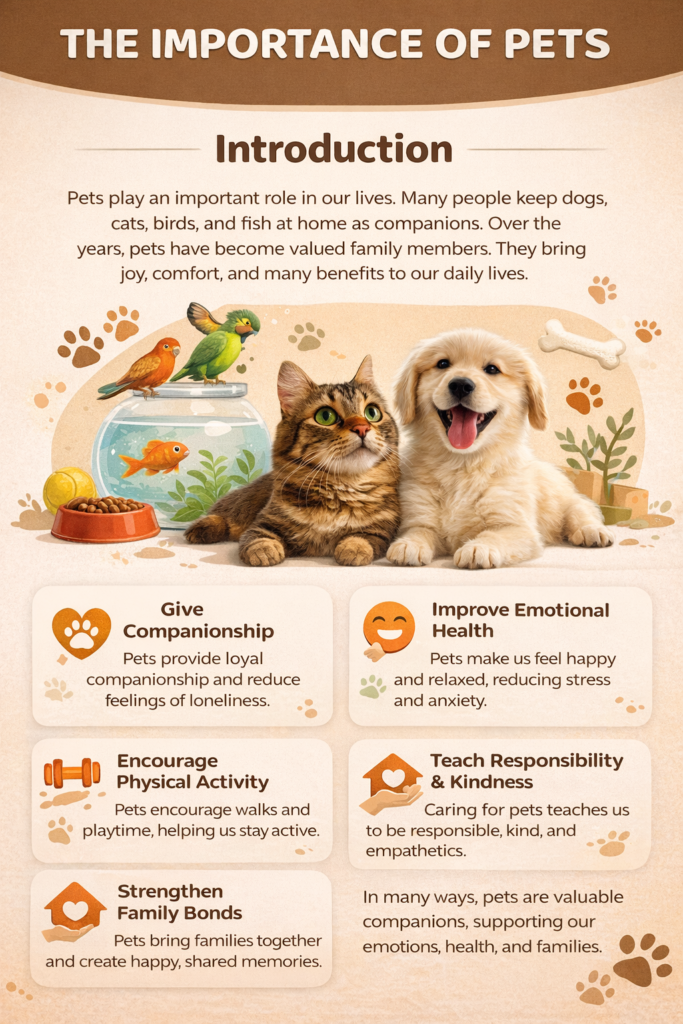
Pets play an important role in our lives. Many people keep pets at home. Dogs, cats, birds, and fish are common pets. People love pets because they bring joy and comfort. The importance of pets grows every year. Today, pets are not only animals. They are family members. Life can feel busy and stressful. People work long hours. Children spend time on screens. Therefore, many people feel lonely or tired. Pets help reduce these feelings. They give love without asking for anything. In addition, pets stay loyal to their owners.
The importance of pets is evident in many aspects of daily life. Pets support our emotions. They improve our health. They also teach responsibility and kindness. This essay explains why pets are valuable companions and why humans need them.
Pets Give Companionship
First, pets give strong companionship. People do not feel alone when pets stay nearby. A dog waits happily for its owner. A cat sits quietly beside a person. These small actions create comfort.
Moreover, pets listen without judging. People can talk to pets freely. This makes people feel calm. Children and elderly people benefit greatly from this bond. As a result, homes feel warmer and happier.
Loneliness affects many people today. However, pets help reduce loneliness. They provide constant company. Therefore, people feel supported every day.
Pets Improve Emotional Health
Pets help improve emotional health. They make people smile often. Playing with a pet brings happiness. Even watching a pet relax can reduce stress.
When people pet animals, they feel relaxed. Their minds slow down. Anxiety decreases gradually. In addition, pets help people manage sadness.
Many people feel better after spending time with animals. Pets offer comfort during difficult moments. For example, after a hard day, a pet’s presence feels soothing. Thus, pets act as natural stress relievers.
Pets Support Mental Well-Being
Mental health is important for everyone. Pets help people stay emotionally balanced. They create routine and purpose. Owners wake up to feed and care for pets. Therefore, people stay active.
Pets also encourage positive thinking. Their playful behavior spreads joy. Furthermore, pets help people focus on the present moment.
Children with pets often feel more confident. Adults feel less pressure when spending time with animals. As a result, pets support healthy minds.
Pets Encourage Physical Activity
Pets help people stay physically active. Dogs need walks every day. Owners walk with them regularly. This improves fitness naturally.
Exercise becomes enjoyable with pets. Playing fetch or running in the yard increases movement. Consequently, people stay healthier.
Physical activity improves heart health. It also increases energy levels. Even simple playtime helps the body stay strong. Therefore, pets encourage healthy lifestyles.
Pets Teach Responsibility
Pets depend on humans for care. Owners must feed them on time. They must provide clean water and shelter. Because of this, people learn responsibility.
Children learn valuable lessons from pet care. They understand commitment and patience. For example, feeding a pet daily builds discipline.
Moreover, caring for animals teaches planning skills. Owners must remember vet visits and grooming schedules. As a result, pets help develop life skills.
Pets Teach Kindness and Empathy
Pets help people become kinder. Owners learn to understand animal needs. They notice emotions like fear, happiness, and excitement.
Children learn empathy through pets. They see how gentle actions create trust. Therefore, they become more caring toward others.
Kindness learned from pets spreads into daily life. People treat friends and family with more patience. In this way, pets improve human behavior.
Pets Strengthen Family Bonds
Pets bring families together. Family members share pet duties. They feed, play, and care for the animal together.
Shared activities create happy memories. Families laugh while watching pets play. These moments build stronger relationships.
In addition, pets reduce tension at home. A playful pet often changes a stressful mood. Consequently, homes feel peaceful and joyful.
Pets Help Children Grow
Children benefit greatly from pets. They learn responsibility early. They also gain confidence by caring for animals.
Pets encourage outdoor play. Children spend less time on screens. Instead, they explore and interact with nature.
Furthermore, pets teach emotional understanding. Children learn that animals need love and attention. Therefore, they grow into compassionate adults.
Pets Support Elderly People
Older adults often feel lonely. Pets provide companionship and comfort. A pet’s presence makes daily life more meaningful.
Elderly people stay active while caring for pets. Feeding or walking a pet gives purpose. In addition, pets improve mood and reduce sadness.
Many seniors feel safer with pets nearby. Thus, pets improve both emotional and physical well-being for older individuals.
Pets Improve Social Connections
Pets help people meet others. Dog owners often talk during walks. Pet lovers share experiences and advice.
Pets act as conversation starters. Even shy people feel comfortable talking about animals. Therefore, social interaction increases.
Communities become friendlier when people share love for pets. As a result, pets help build social bonds.
Pets Provide Routine and Structure
Pets create daily routines. Feeding time happens at regular hours. Walks and playtime follow schedules.
Routine helps people stay organized. It also reduces stress caused by uncertainty. Moreover, routines give life balance.
People feel productive when they complete pet care tasks. Consequently, pets add structure to daily living.
Pets Offer Safety and Comfort
Some pets provide protection. Dogs alert owners to unusual sounds. This increases home safety.
Even small pets give emotional security. People feel comfort knowing a pet stays nearby. Therefore, pets reduce fear and anxiety.
A loyal pet creates a sense of protection. Owners feel relaxed and confident at home.
Pets Reduce Stress in Modern Life
Modern life moves quickly. People face work pressure and digital overload. Pets help slow life down.
Playing with pets brings mindfulness. People focus on simple, joyful moments. In addition, pets encourage breaks from screens.
Spending time with animals refreshes the mind. Therefore, pets help maintain emotional balance.
Pets Teach Unconditional Love
Pets love without conditions. They do not care about success or appearance. They respond only to care and kindness.
This pure relationship teaches humans important values. People learn loyalty and trust. Moreover, pets forgive easily.
Unconditional love strengthens emotional growth. As a result, owners feel deeply connected to their pets
Conclusion
In conclusion, the importance of pets in our lives is clear and meaningful. Pets provide companionship, love, and emotional support. They improve mental and physical health. They also teach responsibility, kindness, and patience. Furthermore, pets strengthen families and communities. They help children grow and support elderly people. Pets create routine and reduce stress in modern life. Above all, pets bring happiness and comfort every day.
Humans care for pets, but pets also care for humans in special ways. They fill homes with joy and warmth. Therefore, pets are not just animals. They are loyal friends and loving family members. The importance of pets will continue to grow as people understand their true value. By treating pets with love and respect, we build a kinder, better world for both humans and animals.